
Signals from the quantum network
Updates and news from the team building the worldwide quantum computer.

11 signals and counting
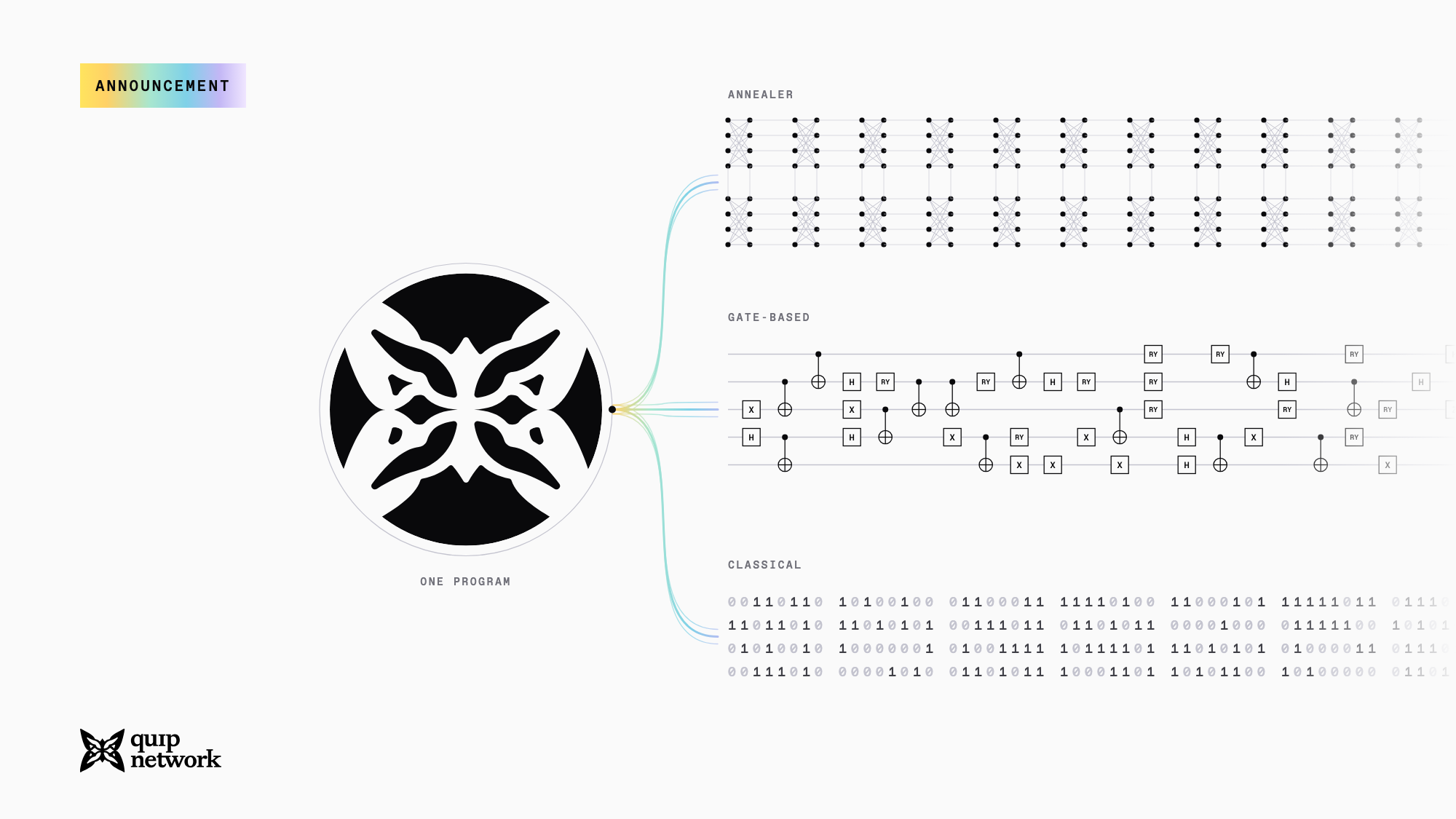
QVM Is Live: One Unified Language for Quantum and Classical Hardware
QVM is live on testnet: one constraint-based language for annealers, gate-based quantum computers, and classical hardware, with the cost of every run quoted before it executes.

Postquant Labs Joins the Quantum Alliance as a Founding Contributor
Nine blockchain organizations are launching the Quantum Alliance, an open standards body that will define what post-quantum readiness means for the blockchain industry. Postquant Labs, the team building Quip Network, is a founding contributor.
QVRF Is Live: The Only True Randomness Is Quantum
QVRF is live: true randomness generated on real quantum hardware, with a transcript anyone can re-run to check where each number came from. Quantum Echoes, the first project built on it, is a free open edition mint on Ethereum.
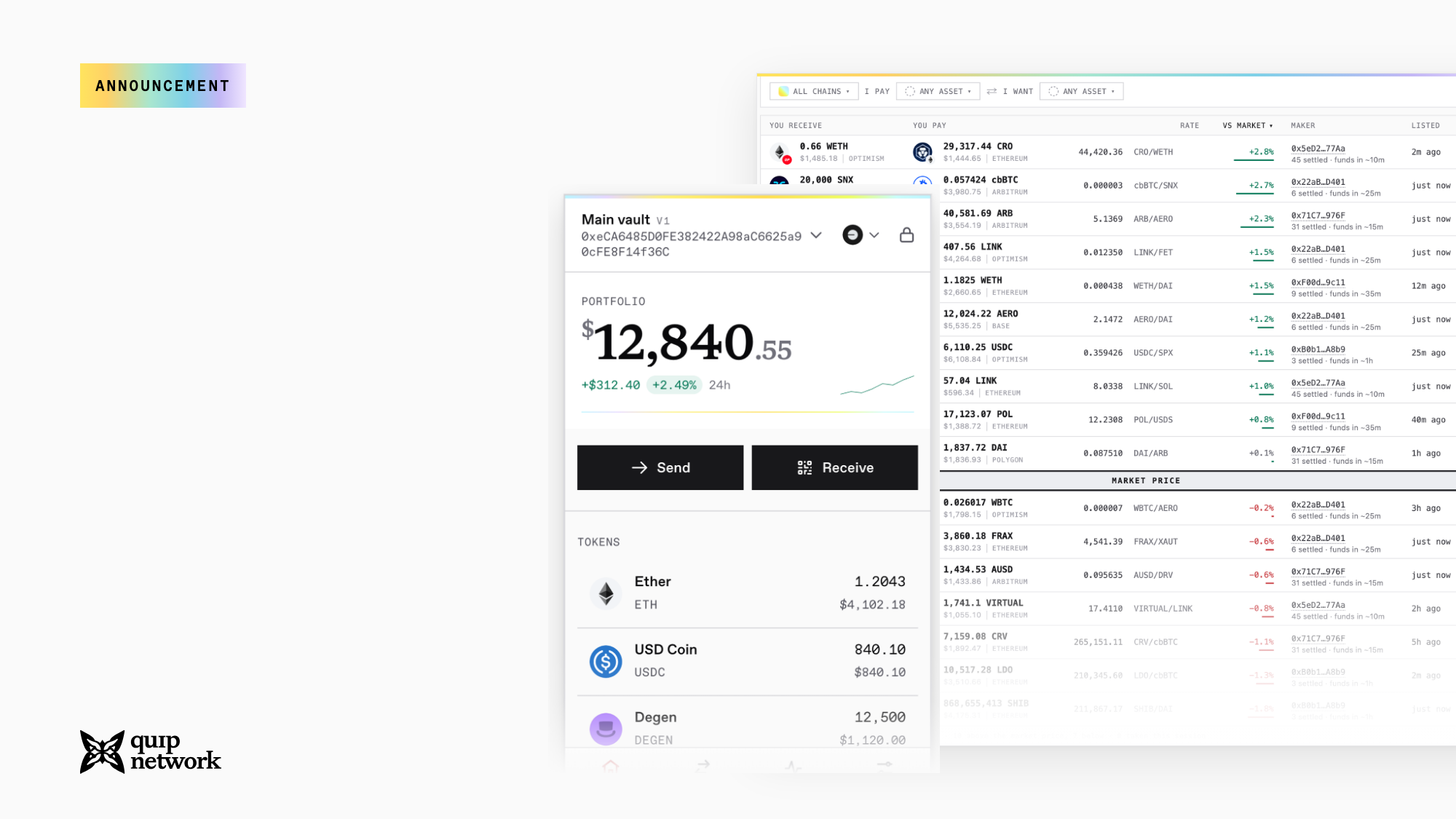
QuipSwap Is Live: Post-Quantum Swaps Anywhere to Anywhere
Cross-chain bridges accounted for 69% of all cryptocurrency stolen in 2022, and the largest DeFi loss of 2026 so far was another bridge exploit worth $292 million.
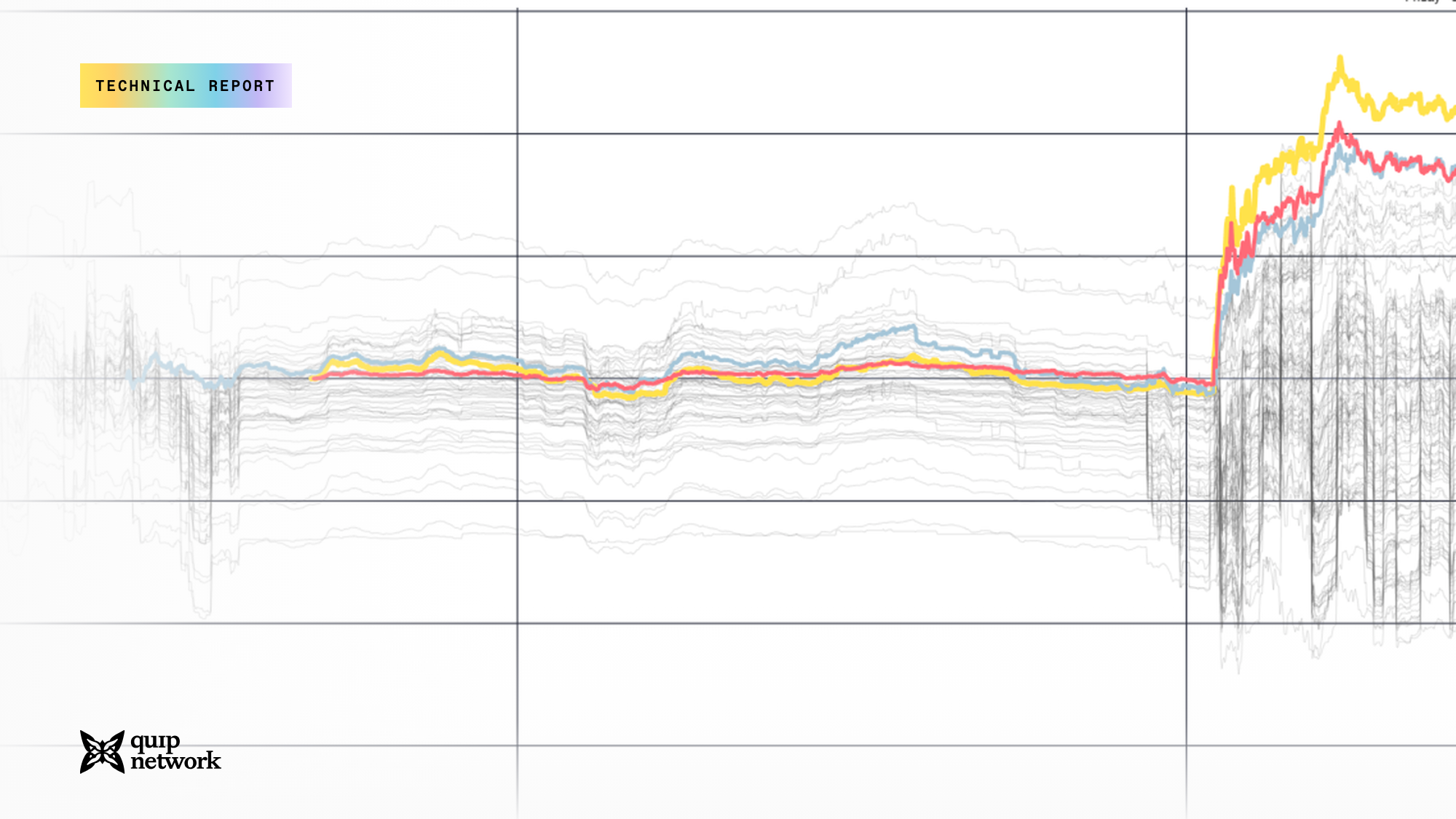
Quantum Annealer Versus Classical Solver on Live Portfolio Optimization
At our Quantum.Tech World 2026 booth, 98 people built portfolio-optimizer agents and every rebalance raced a classical solver against a D-Wave quantum annealer. Here is the method, and all 1,930 head-to-head results.

Quip Network at Quantum.Tech World 2026 in Boston
Quip Network sponsored Quantum.Tech World 2026 in Boston. This recap covers everything we did at the event, including our booth trading competition, our CEO's talk, and the Rare Qubits reception.
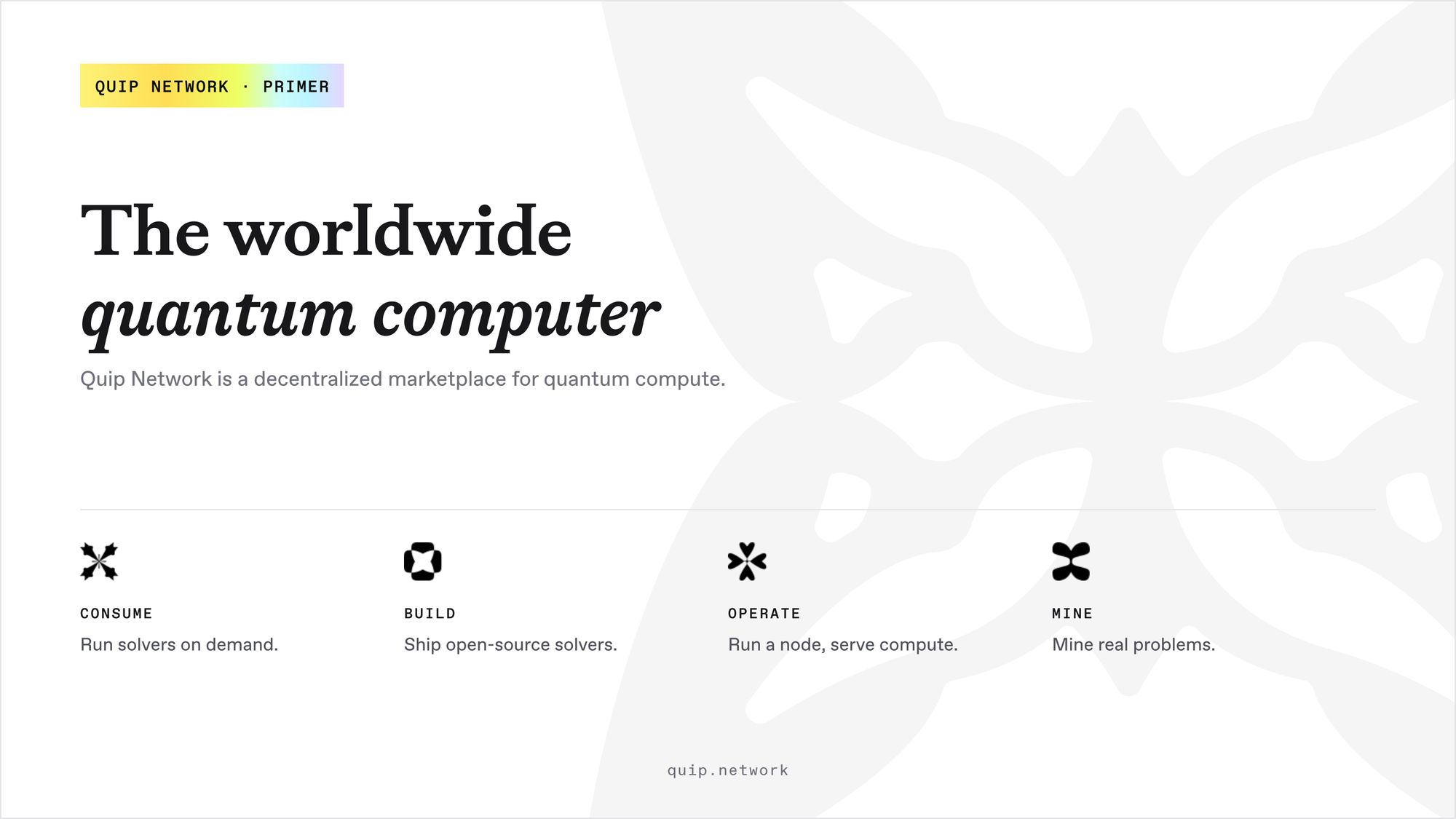
What Is Quip Network? A Primer
This is a primer on Quip Network: what it is, how it works, and what you can do with it today.

A new look for Quip Network
An evolved identity for a bigger mission. The Quip Network brand is rolling out a new logo, design system, and visual language today, designed in collaboration with Relate Studio.
Quip Network Brings Post-Quantum Protection to Bitcoin
Quantum-resistant Bitcoin protection, deployed on Arch Network's Bitcoin-native smart contract layer, is shipping without a soft fork, community vote, or risk of frozen funds. Open source and trustless, the architecture lets every holder upgrade while keeping their existing custody.
Quip Network Testnet Is Live
The first distributed quantum compute network, combining quantum and classical hardware in a single trustless marketplace, is now open for public testing. Open source and open to everyone, hardware operators of all types can participate and earn rewards.
Topics that come up the most.
Proof of useful work, explained
Proof of useful work is a way to secure a blockchain where miners compete by solving problems someone actually wants answered, instead of hash puzzles that have no use outside consensus. It aims to keep the security of proof of work, but it only works for problems whose answers are cheap to check, which is why so few chains have pulled it off. The short version A blockchain needs a way to decide who produces the next block. Bitcoin does this with proof of work: miners spend computation guessi
What does it actually cost to run a job on a quantum computer?
What quantum compute actually costs: privately quoted enterprise contracts, published cloud per-task rates from $0.30 plus shots, and the open-market model where hardware competes for the job.
Is your wallet already exposed to quantum harvesting? Here is how to check
There is a specific, checkable fact about your crypto wallet that most people have never looked up: whether its public key is visible on chain. That one detail determines whether your funds are in the blast radius of the first cryptographically relevant quantum computer, and checking it takes seconds. The short version Quantum computers will eventually break the elliptic-curve signatures that guard crypto. They can only break what they can see, and on Ethereum, and most Bitcoin address types,
Why does Quip Network run its testnet on Flux instead of AWS?
Quip Network runs the public side of its Aglais testnet on Flux, a decentralized computing network, for about $55 a month. That covers seven services: the bootnodes, an EVM endpoint, the faucet, two block explorers, the web portal and a node that publishes chain snapshots. Renting the same servers from AWS would cost about $1,060 a month. Price is the first reason we chose Flux. The others are what it does for small services like ours: it handles certificates for our web front ends, lets us cho
Cross-chain swaps with no bridge to hack: what two audits found in QuipSwap
Cross-chain bridge hacks cost users more than $2 billion in 2022 alone, according to Chainalysis. Ronin lost $625 million. Wormhole lost over $320 million. Nomad lost $190 million in one evening, drained by copy-paste attackers who needed no special skills once the first person found the hole. The pattern is always the same: a bridge holds a pile of locked assets, a small set of signers guards the pile, and sooner or later someone gets past the guards. The short version QuipSwap settles a tr
XQuad in practice: two demos, one toolchain
Two of our demos now run on XQuad, the toolchain behind the Quip Virtual Machine. One is a trading game that close to a hundred people played at Quantum.Tech World in June. The other is a logistics yard where a D-Wave chip and a classical annealer compete to plan the day's trucks. They use XQuad differently, and that is the point of this post. The trading game shows the solver layer and the network order on a QUBO it already had. Parcel Forum shows the constraint language, with the problem writ

Don't miss an update
Get new posts and project updates delivered to your inbox. No spam, unsubscribe anytime.